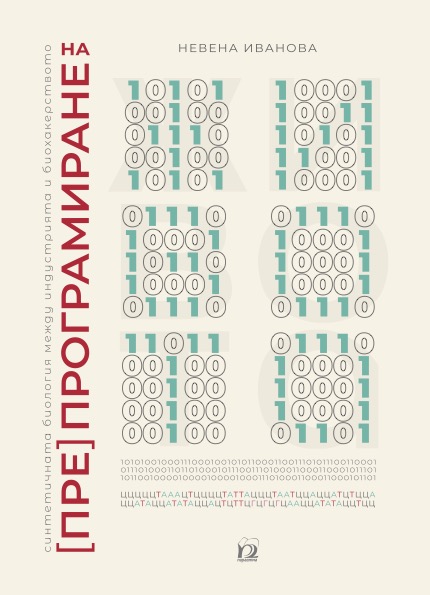
(Re)programming Life: Synthetic Biology between Industry and Biohacking
In 1988, the bioartist Joe Davis and the biologist Dana Boyd encoded the ancient Germanic rune ᛉ — a symbol of life — into the genes of a bacterium. Microvenus is one of Joe Davis’s most discussed projects and represents a molecular poetic message in a ‘living bottle’, intended for dispatch into interstellar space (Davis 1996:73). Such an interplay between cultural, mythological, digital and biological codes vividly demonstrates the spirit of bioart and biohacking and their ability to utilise new technologies to raise profound aesthetic, philosophical and social questions.
Twelve years before the official emergence of synthetic biology as a science, this iconic work also became one of the first attempts to conceive of DNA as computationally programmable. The conceptual innovation of synthetic biology lies precisely in the direct link it establishes between the principles of electronics and the programming of life. ‘The fact that it is, in practice, possible to programme a living cell like a computer, that DNA can be treated like an electronic circuit, is the most mind-boggling idea to have emerged at the start of the 21st century. If this is indeed possible, then we will be able to control cells at a level far beyond what we can currently achieve,” notes Vincent Libis, a synthetic biologist at the French National Institute of Health and Medical Research (Inserm).
The book (Re)programming Life: Synthetic Biology between Industry and Biohacking takes this almost heretical idea as its starting point to pose the following question: what happens when engineers begin to programme life in the same way they programme a computer? Moving between the philosophy of Bernard Stiegler, biohacking spaces and the industrial biofoundries of the future, the study reveals the dual, pharmacological nature of this new technology. On the one hand, algorithmization turns life into an assembly line, whilst knowledge in laboratories is increasingly delegated to algorithmic systems and robots — a possible tendency towards what Stiegler describes as ‘proletarianization’ of the cognitive process. On the other hand, however, this very same algorithmization opens the laboratory’s doors to artists, designers, enthusiasts and active citizens, transforming the amateur into a revolutionary figure of the 21st century.
From bioart to biohacking garages, from industrial robotic laboratories to the ‘do-it-yourself biology’ movement — the book traces how the boundary between organism and machine, between discovery and invention, between science and art is blurring and layering, opening up a multitude of exciting new directions for the human imagination and thought.